What DSLR Means in Camera Terms
- Published
- Reading time
- 9 min read
- Prepared by
- LiteGallery editorial team
DSLR means “digital single-lens reflex,” a camera design that uses one lens for both viewing and taking the photo, with a mirror system that sends the image to an optical viewfinder. In camera terms, the phrase usually refers to interchangeable-lens digital cameras built around that reflex mechanism.
That basic definition matters because DSLR has become one of the most familiar labels in photography, yet the term still hides a lot of useful detail. Understanding what DSLR means in camera terms helps explain how these cameras work, why they were so influential, and how they compare with other camera types.
If you want a broader buying and video-quality context, see our related guide, «Comparing Video Quality in Kids’ Action Cameras: A Complete Guide». Here, though, we’ll focus on the DSLR meaning itself and what it tells you about the camera’s design and use.
| Criterion | DSLR | Mirrorless |
|---|---|---|
| Viewing system | Optical viewfinder with mirror | Electronic viewfinder or rear screen |
| Body design | Mirror box and prism add bulk | Usually smaller body layout |
| Video handling | Depends on live view and mirror-up operation | Designed around live electronic viewing |
| What to compare | Sensor, autofocus, recording limits | Sensor, autofocus, recording limits |
What does DSLR mean in camera terms?
The meaning behind the acronym
DSLR means digital single-lens reflex: a camera built around one lens and a reflex mirror that sends light to the viewfinder and then to the sensor when you press the shutter. The “single-lens” part matters because the same lens is used for framing and recording, unlike older film SLR cameras that used the same mirror-and-prism idea on film.
The “digital” word is the key difference from film-era SLR bodies such as the Canon EOS 1V or Nikon F6, which relied on film instead of a sensor. In practical camera terms, DSLR describes the body design and viewing system, not a fixed sensor size, and it does not automatically mean one codec, one resolution, or one video format.
Why the term still appears in video discussions
When photographers talk about video quality, DSLR usually points to the camera’s overall design rather than a specific technical spec sheet. That is why the same label can cover very different bodies, from compact APS-C models to full-frame cameras, even though they may handle video differently.
- Body design: DSLR = reflex mirror + optical viewing path.
- Recording medium: digital sensor, not film.
- Video context: the term says how the camera is built, not whether it records 4K, 1080p, or a particular codec.
How does the mirror mechanism work?
Mirror up, sensor exposed
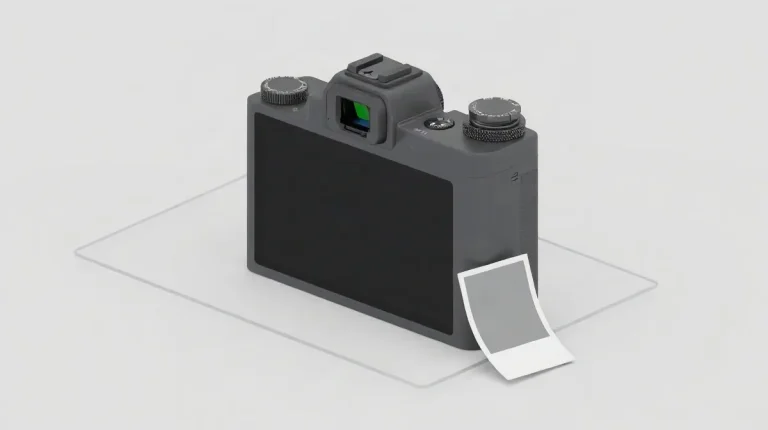
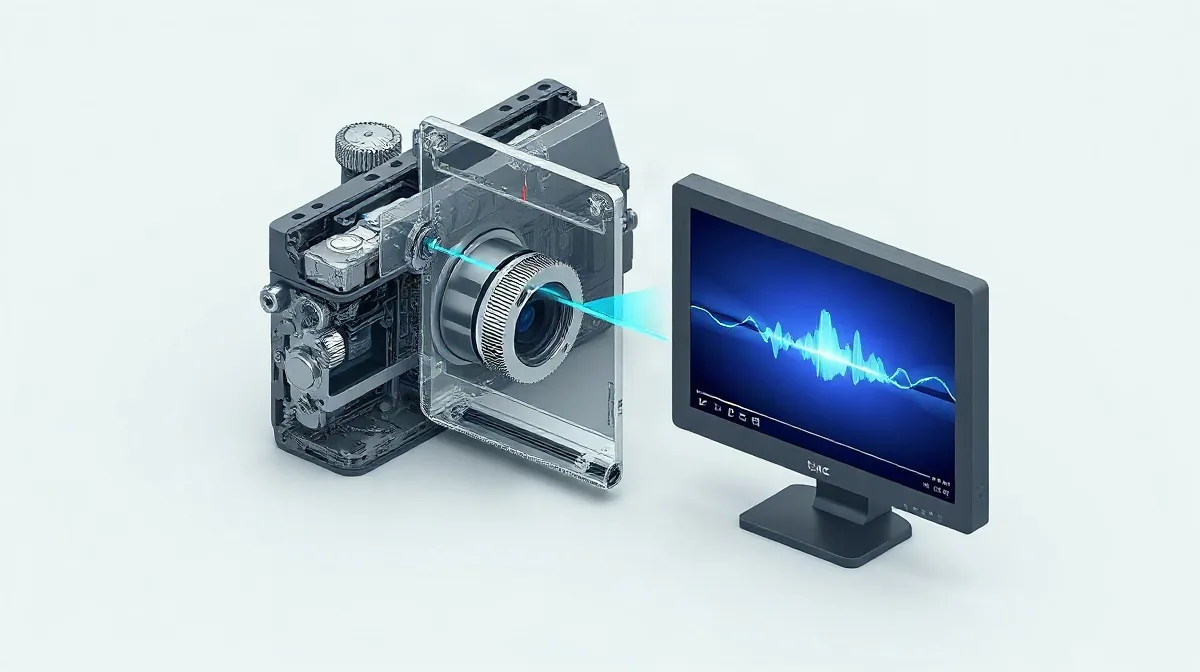
A DSLR works by using a mirror set at a 45-degree angle to bounce incoming light upward into the optical viewfinder; when you press the shutter, that mirror flips out of the way so the light can reach the sensor, and that flip is the reflex action that gives the system its name.
That moving mirror is central to still photography because it lets you compose through the lens while the sensor waits behind it. The trade-off is that the camera must physically clear the light path at the moment of exposure, so the body behaves differently from a mirrorless model during the shot.
Optical viewing versus electronic viewing
DSLR handling feels distinct because the optical viewfinder shows a direct reflected view, while mirrorless cameras present a live electronic feed instead. In practical use, that means a DSLR’s view is tied to the mirror-and-prism path, not to an always-on screen-style preview.
- DSLR: mirror at 45 degrees, optical viewfinder, and a flip-up mirror motion at exposure.
- Mirrorless: no reflex mirror blocking the sensor, so the camera can keep showing a live electronic view.
- Video: the mirror must stay out of the way, which changes how the camera behaves compared with stills shooting.
Why does DSLR design matter for video quality?
What the mirror does to video operation
DSLR design matters for video because the mirror must lift out of the light path, so recording depends on live view rather than the camera’s normal optical viewfinder route. That mechanical shift changes how the camera behaves in motion work, especially when autofocus has to keep up with moving subjects.
In many current mirrorless cameras, on-sensor phase detection helps focus stay more responsive during video, while a DSLR may rely on a less direct focusing setup once live view is active. For comparison, the real question is not “DSLR or not,” but how the camera handles focus, heat, and recording limits.
Why sensor and codec matter too
Video quality is not determined by the DSLR label alone. Sensor size, lens quality, and processing all shape whether footage looks sharper, cleaner, or more stable, so two cameras with the same DSLR body style can produce very different results.
- Focus system: live-view autofocus behavior, including whether the camera uses on-sensor phase detection.
- Thermal handling: how long the camera can record before heat becomes a limit.
- Recording limits: clip length, codec choice, and processing strength, which can change output more than the mirror design itself.
When is a DSLR a poor fit for video?
Trade-offs in size and handling
A DSLR is a poor fit for video when you need quiet, compact, and long-running shooting: the mirror and prism make the body mechanically louder and often larger than a comparable mirrorless camera. That extra bulk can matter in handheld filming, travel kits, and any setup where you want the camera to stay unobtrusive for more than a short take.
- Silent operation: the moving mirror is audible even in still-photo use, so a DSLR is not the best choice for quiet locations or on-camera audio work.
- Small-body autofocus: many newer mirrorless cameras are built around video-first AF systems, which can be more practical for continuous focus during moving shots.
- Portability: the prism-and-mirror box adds size, so a DSLR can feel less convenient in a travel kit or on a lightweight rig.
Where mirrorless often has the edge
For long, uninterrupted video sessions, the DSLR label matters less than the camera’s body design and recording limits. Some cameras are simply better suited to extended clips because they manage heat, power, and file limits more effectively, while others stop because of their internal recording rules rather than any mirror mechanism.
That is why a DSLR can still work for video, but it is usually the weaker option when your priorities are silence, continuous autofocus, and a smaller package. If those three points matter most, a mirrorless body is often the more practical tool.
How should you read DSLR specs for video?
Resolution and output
Read DSLR video specs by checking the recording resolution first, because the DSLR label itself does not tell you whether the camera tops out at 1080p or includes 4K. For a buying guide, match that number to the job: 1080p may be enough for web delivery, while 4K matters more if you need extra cropping room or a sharper master file.
- Resolution: look for 1080p or 4K in the video spec line, not just the DSLR name.
- Output path: check whether the body offers clean HDMI output for an external recorder or monitor.
- Use case: compare the camera against your exact workflow, such as solo filming, studio capture, or external recording.
Autofocus and recording limits
Autofocus names need close reading, because live-view AF and still-photo AF can behave differently on the same DSLR body. That difference can matter more than the internal screen when you plan to record through an external setup, especially if clean HDMI output is available and the camera is meant to stay on a tripod or rig.
When you compare models, judge the video features against the real task rather than the acronym on the box. A DSLR with strong still-photo autofocus may still be a weaker video choice if its live-view behavior, output options, or resolution do not fit the way you shoot.
What should you compare instead of the label alone?
The specs that affect footage
Compare the sensor size, lens options, and video resolution first, because those are the specs that most directly shape image quality in a DSLR. A larger sensor usually gives you more room for cleaner detail and better low-light performance, while lens choice changes how much you can frame and how sharp the result looks.
- Sensor size: APS-C and full-frame bodies do not behave the same, so check which format the camera uses before judging image quality.
- Lens options: A camera with native lenses from brands like Canon or Nikon gives you more room to grow than a body with a narrow lens lineup.
- Video resolution: Look at whether the camera records 1080p or 4K, since that affects how much detail you can capture for editing and cropping.
The comparisons that actually matter
If you shoot handheld or travel often, compare body weight, battery life, and stabilization support instead of stopping at the DSLR label. A lighter body is easier to carry all day, a stronger battery reduces charging breaks, and in-body or lens stabilization can help keep shots steady without a tripod.
For action, kids in motion, or any fast-moving scene, the autofocus system and recording limits matter more than the badge on the front. Check how many autofocus points the camera offers, whether it supports continuous tracking, and whether it can keep recording without overheating or hitting a short clip limit. For a wider context on image-quality trade-offs, подробнее в нашем разборе «Comparing Video Quality in Kids’ Action Cameras: A Complete Guide».
Frequently asked questions
What does DSLR stand for?
Does DSLR automatically mean better video quality?
Why do people still mention the mirror in video discussions?
Is a DSLR the same as an SLR?
Key takeaways
- DSLR means digital single-lens reflex.
- The mirror flips up for exposure and defines the camera’s viewing system.
- Video quality depends on more than the DSLR label.
- Sensor, autofocus, and recording limits matter more than the acronym.
- Mirrorless cameras often simplify live-view video shooting.