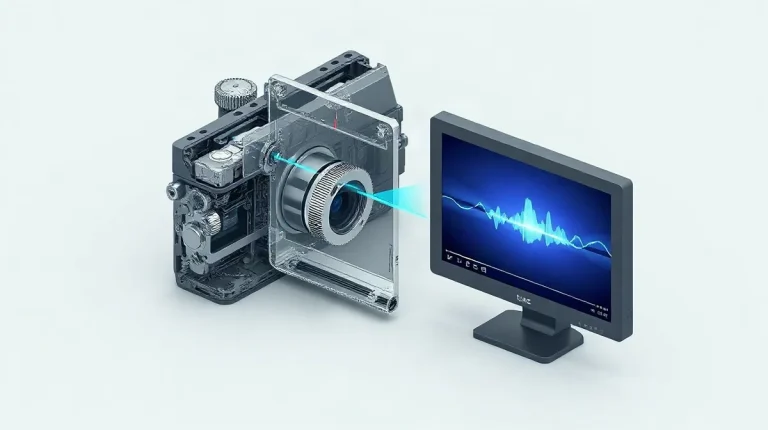
HyperSmooth vs RockSteady: Which Stabilises Better?
- Published
- Reading time
- 7 min read
- Prepared by
- LiteGallery editorial team
Updated: October 13, 2026
Neither HyperSmooth nor RockSteady is universally better: the result depends on the camera, settings and movement. To choose between them, compare the footage each system produces in the conditions you actually shoot.
HyperSmooth and RockSteady are action-camera stabilisation systems designed to reduce visible shake, but a steady-looking clip is only part of the decision. This comparison focuses on how to judge their results and what to consider before choosing one.
| Criterion | GoPro HyperSmooth | DJI RockSteady |
|---|---|---|
| Named version | HyperSmooth 6.0 | RockSteady 3.0 |
| Named camera or series | GoPro HERO13 Black | DJI Osmo Action series |
| Reported strength | Highlighted for chaotic scenarios | Described as highly regarded |
| Reported crop trade-off | Comparison baseline | About twice HyperSmooth’s in one forum discussion |
What are HyperSmooth and RockSteady?
HyperSmooth is GoPro’s electronic video-stabilisation technology, while RockSteady is DJI’s; both are software features designed to reduce visible shake in action-camera footage. The named versions here are HyperSmooth 6.0 and RockSteady 3.0, with RockSteady 3.0 associated with DJI’s Osmo Action series.
What the names tell you—and what they don’t
HyperSmooth 6.0 and RockSteady 3.0 identify different manufacturers’ stabilisation systems, not a shared image-quality rating. Neither name alone tells you how footage will look across every camera setting, so the version label is not a direct measure of overall image quality.
- GoPro HyperSmooth 6.0: GoPro’s electronic stabilisation technology, version 6.0.
- DJI RockSteady 3.0: DJI’s stabilisation technology, named for the Osmo Action series.
HyperSmooth and RockSteady share the aim of reducing visible shake, but there are no comparable laboratory measurements or common test method for judging them side by side. It therefore supports identifying what each system is, but not declaring a measured winner from the version names alone.
How do HyperSmooth 6.0 and RockSteady 3.0 compare in use?
Chaotic movement
For chaotic movement, the available comparison favours HyperSmooth 6.0 in the GoPro HERO13 Black, while the evidence does not show that RockSteady 3.0 is ineffective. It also describes DJI’s stabilisation as highly regarded, so the practical distinction is a reported edge for GoPro in demanding conditions—not a verdict that DJI footage will be shaky.
- GoPro HERO13 Black: HyperSmooth 6.0 is singled out for stabilisation in chaotic scenarios.
- DJI Osmo Action: RockSteady 3.0 is also regarded as a capable system; the comparison material does not establish that it fails in difficult movement.
Crop and field of view
Crop is the clearest reported trade-off: a DJI Osmo Action forum discussion says RockSteady crops about twice as much as HyperSmooth. That is a forum comparison, not a controlled specification, so treat the ratio as a reported observation—not a guaranteed result across camera models, stabilisation modes or resolutions.
In use, a larger crop can leave less of the scene visible, which may matter when framing action close to the edges. There is no controlled, model-matched test or exact crop figures for the HERO13 Black and DJI Osmo Action, so it cannot establish a universal field-of-view winner; compare the framing in the specific mode you plan to use.
Why does stabilisation crop the frame?
Electronic stabilisation crops the frame because it shifts the recorded image inside the sensor’s boundaries to counter camera movement, leaving less of the original view visible. Both GoPro HyperSmooth and DJI RockSteady use electronic stabilisation, but RockSteady has a particular crop trade-off.
A user discussion describes RockSteady’s crop as about twice HyperSmooth’s, but that is a comparison from one discussion, not a measured universal figure. There is no crop percentage or standardised test, so a precise claim about how much field of view either system removes across cameras or settings is not supported.
When the crop matters
The practical cost is most noticeable when a camera is close to its subject or when the shot needs to preserve a wide view. For example, an action shot meant to show both the moving subject and its surroundings can feel more confined after stabilisation. Consider the framing you need: RockSteady’s reported crop may be a concern in tight spaces, while the evidence is not enough to assign a reliable field-of-view advantage to HyperSmooth.
When can either stabilisation system fall short?
Check the frame before filming.
Yes—GoPro HyperSmooth and DJI RockSteady can fall short when stabilisation’s crop removes important edges or when the chosen mode does not suit the shot. A steadier clip is not necessarily a better composition: check the actual frame, especially around the edges, before recording.
The reported comparison that RockSteady crops about twice as much as HyperSmooth is a reason to inspect framing, not proof that every DJI setting crops more than every GoPro setting. Cropping can vary with the camera and stabilisation mode, so judge the specific setup rather than treating that comparison as a universal rule.
Test the mode you plan to use.
Test the intended setting in conditions close to the real shot, and check both image steadiness and how much of the scene remains in frame.
- GoPro HyperSmooth 6.0: check whether the crop preserves the edges your composition needs.
- DJI RockSteady 3.0: check framing on the exact camera and setting; the reported crop comparison does not settle every mode.
Neither stabilisation label alone predicts which clip will look best. Leading action cameras now perform well at stabilisation, making the framing and the tested setting more useful checks than the name by itself.
How should you choose between GoPro and DJI?
Choose the GoPro HERO13 Black if HyperSmooth 6.0’s reported performance in chaotic scenarios is the deciding factor; consider a DJI Osmo Action model with RockSteady 3.0 if you prefer DJI’s camera system and its crop suits your framing. There is no supplied matched test to establish a universal winner, so treat those reports as a starting point, not a head-to-head result.
- GoPro HERO13 Black: Prioritise it when stabilisation in unpredictable movement matters most. HyperSmooth 6.0 is specifically noted for chaotic scenarios.
- DJI Osmo Action with RockSteady 3.0: Choose it if you favour DJI, but check how the reported crop affects your composition. One supplied comparison describes RockSteady’s crop as about twice HyperSmooth’s; that claim is not a matched test across the two current models.
- Your intended recording mode: Compare the exact camera models and modes you plan to use.
For both systems, test whether the footage is steady enough for your shot and whether the crop leaves the framing you want. If GoPro and DJI both meet those needs, base the choice on other camera differences rather than paying extra solely for stabilisation.
What is the practical verdict on stabilisation?
HyperSmooth 6.0 has the edge in chaotic shooting, but RockSteady 3.0 is also a capable stabilisation system; the practical difference may come down to how much of the frame each camera crops. Because stabilisation is now a strength across top action cameras, neither feature name alone settles which camera is the better buy.
- GoPro HyperSmooth 6.0: the stronger choice to test first for unpredictable movement, particularly on the GoPro HERO13 Black.
- DJI RockSteady 3.0: capable, but one comparison describes its crop as about twice HyperSmooth’s. Treat that as a reported comparison, not a guaranteed result for every DJI model or setting.
Test the framing, not just the feature name
The crop matters because stabilisation can trim the edges of the image, leaving less room around a moving subject. Before choosing a GoPro or DJI model, record the same real-world movement with both cameras and compare how much of the scene remains in frame at the settings you expect to use.
That test is more useful than assuming HyperSmooth always wins or that RockSteady’s reported heavier crop applies in every situation. When both systems produce usable footage, choose based on the exact camera’s stabilised framing in your intended conditions—not the badge on the specification sheet.
Frequently asked questions
Is HyperSmooth better than RockSteady?
Does RockSteady crop more than HyperSmooth?
Which GoPro model is named with HyperSmooth 6.0?
Which DJI system uses RockSteady 3.0?
What this piece draws on
- rcgroups.com — “Discussion DJI OSMO ACTION camera "whassup thread"”
- thepostflow.com — “Best Action Cameras for Pros: Top Picks Compared – The Post Flow”
- dpreview.com — “RockSteady vs Hypersmooth”
- findingtheuniverse.com — “Best Action Camera 2026: A Pro Photographer's Picks”
- store.xtra-us.com — “Best Action Camera Comparison: DJI vs GoPro vs Insta360 vs XTRA”