Comparing Video Quality of Kids Action Cameras: Key Metrics
- Published
- Reading time
- 8 min read
- Prepared by
- LiteGallery editorial team
Video quality in kids action cameras is primarily determined by resolution, frame rate, image stabilization, and lens quality, with the best models offering a balance of smooth motion capture and clear, vibrant footage suited to active, fast-moving subjects. These key metrics help parents and young users capture memorable moments with minimal blur and distortion.
Understanding these essential factors is crucial when comparing video quality of kids action cameras, as the demands of capturing energetic play differ significantly from standard photography. Factors like frame rate affect how fluidly motion appears, while image stabilization reduces shakiness, a common issue when children are running or jumping. This article explores these technical metrics to equip readers with the knowledge needed to make informed choices.
For those interested in related topics, consider our detailed guides such as Choosing the Best Printers for High Quality Photobooks Showcasing Kids’ Action Shots, which dives into preserving these videos in print form, or Cold Weather Action Cameras: Ensuring Video Quality in Extreme Conditions, which addresses challenges in harsher environments. Also, Compact Action Cameras for Kids: Balancing Portability and Video Quality offers insights into device size versus performance, while Understanding the Canon DSLR Camera Mirror Mechanism Principle for 2026 explains fundamental camera technology that underpins many modern imaging devices.
| Model | Max Resolution & Frame Rate | Stabilization Type | Price (USD) |
|---|---|---|---|
| GoPro HERO11 Mini | 4K 60fps | Optical + Electronic | ≈ $399 |
| DJI Action 3 | 4K 60fps | Electronic | ≈ $329 |
| Akaso Brave 7 LE | 2.7K 30fps | Electronic | ≈ $150 |
| Insta360 GO 3 | 1440p 50fps | Electronic | ≈ $320 |
| Budget Model XYZ | 720p 30fps | None | < $100 |
What video resolutions and frame rates matter most for kids action cameras?
Resolution Importance
Video resolution is a key factor in kids action cameras, with most 2026 models offering either 1080p at 60fps or 4K at 30fps to balance clarity and file size. For example, the GoPro HERO11 Mini supports 4K at 60fps, providing crisp footage suitable for detailed playback, though it carries a premium price of around $399. In contrast, lower-end cameras priced under $100 typically max out at 720p 30fps, resulting in less detailed images and reduced sharpness during fast movements.
Optimal Frame Rates
Frame rates of 60fps and above are essential for smooth video of fast-paced activities like running or biking. The DJI Action 3, priced near $329, offers 60fps at 1080p, making it a strong choice for capturing clear, fluid motion. Cameras limited to 30fps or lower struggle with motion blur and choppiness, which is common in budget models that restrict frame rates to 30fps or less, thereby diminishing the overall viewing experience for action-packed footage.
- GoPro HERO11 Mini: 4K at 60fps, ~$399
- DJI Action 3: 1080p at 60fps, ~$329
- Entry-level models: typically 720p at 30fps, under $100
How does image stabilization impact video quality in kids’ action shots?
EIS vs OIS
Image stabilization significantly enhances video quality in kids’ action shots by reducing blur and jitter caused by rapid movement. Electronic Image Stabilization (EIS), found in cameras like the Akaso Brave 7 LE priced around $150, digitally compensates for shake but may introduce slight cropping or artifacts. In contrast, Optical Image Stabilization (OIS), featured in premium models such as the GoPro HERO11 Mini, physically adjusts lens elements to achieve smoother footage without digital degradation, offering superior stabilization especially during vigorous play.
- Akaso Brave 7 LE: $150, employs EIS to reduce shake in active play footage
- GoPro HERO11 Mini: premium model including OIS, delivering better smoothness
Stabilization Effects
Without any stabilization, kids’ action videos often suffer from jitter, making fast-paced scenes difficult to watch and requiring post-processing to correct. EIS effectively minimizes shake in budget-friendly cameras but may slightly reduce the field of view. OIS maintains full framing and delivers crisper motion clarity, though it is rare in sub-$200 models. For parents prioritizing ease of use and cost, EIS-equipped cameras like the Akaso Brave 7 LE offer a practical balance, while those seeking professional-grade smoothness benefit from OIS in devices such as the GoPro HERO11 Mini.
Why is lens quality and field of view critical for capturing kids’ action videos?
Field of View Ranges
A wide field of view (FOV) is essential for kids’ action videos to capture more of the dynamic scene and preserve context during fast movement. Cameras with FOV between 120° and 170° are optimal, with the DJI Action 3 offering a 155° FOV that balances immersive coverage without excessive distortion. This wide angle ensures kids’ activities, such as running or biking, stay fully visible within the frame, enhancing the storytelling aspect of the footage.
Lens Material and Aperture
- Lens Glass Quality: Premium kids’ action cameras often use aspherical glass lenses to sharpen images and reduce distortion, unlike budget models priced between $50 and $80 which typically employ plastic lenses prone to blurring and warping.
- Fixed Aperture: A fixed aperture around f/2.8 is common in action cameras designed for outdoor daylight shooting. This aperture setting balances brightness and depth of field, enabling clear focus on moving children while maintaining sufficient exposure under typical daylight conditions.
What are common trade-offs or limitations when choosing a kids action camera for video quality?
Price vs Quality
Choosing a kids action camera for better video quality typically means paying more, with 4K 60fps models starting around $300, while budget options under $100 often sacrifice resolution and image stabilization. For example, cameras like the GoPro HERO11 Mini deliver crisp 4K footage but come at a higher cost, whereas cheaper brands tend to offer only 1080p or lower resolutions and lack advanced stabilization features.
Battery and Durability
Higher-resolution recording significantly reduces battery life, with many 4K 60fps cameras lasting only 60 to 90 minutes per charge, necessitating spare batteries for longer sessions. Additionally, rugged, waterproof models such as the GoPro HERO11 Mini weigh about 133 grams, providing durable protection but at the cost of added weight, while lighter alternatives often compromise on robustness and water resistance to stay portable and affordable.
- 4K 60fps video recording: battery life approximately 60–90 minutes
- GoPro HERO11 Mini weight: around 133 grams
- Entry-level kids cameras: price under $100 with lower resolution and minimal stabilization
- Premium 4K 60fps models: starting price near $300 with enhanced video quality
How do kids action cameras handle video quality in challenging conditions like cold weather?
Kids action cameras generally face challenges in maintaining video quality under cold weather conditions due to battery inefficiency and lens fogging, but models like the GoPro Hero11 Black and the DJI Action 3 are designed to operate effectively down to -10°C, preserving video performance during winter activities.
Battery Performance in Cold
Cold temperatures significantly reduce battery efficiency, causing shorter recording times and potential camera shutdowns. For example, the GoPro Hero11 Black maintains functional battery life down to about -10°C, though users may experience a 20–30% reduction in recording duration compared to room temperature. Similarly, the DJI Action 3 is rated for reliable operation in temperatures as low as -10°C, benefiting from a battery management system optimized for cold weather.
Lens Fogging Solutions
- GoPro Hero11 Black includes an anti-fog insert accessory that helps prevent lens fogging during rapid temperature changes common in winter play.
- DJI Action 3 features quick-release lens covers allowing fast lens swaps to avoid fog buildup during active use in snowy or humid conditions.
- Both cameras employ waterproof and sealed enclosures to reduce condensation inside the housing, crucial for maintaining clear video quality and protecting electronics from moisture.
What role does portability play in balancing video quality for kids action cameras?
Portability significantly influences the balance between video quality and ease of use in kids action cameras, as lighter, more compact devices enhance handling but often limit features like stabilization or battery life. For example, the GoPro HERO11 Mini weighs just 133 grams while delivering high-quality footage, making it easier for children to operate without sacrificing too much video performance.
Weight and Handling
Compact models such as the GoPro HERO11 Mini (133 g) provide excellent video quality combined with manageable size and weight suitable for young users. In contrast, smaller cameras like the Insta360 GO 3 prioritize portability at around 35 grams but sacrifice 4K resolution and advanced stabilization to maintain a minimal form factor. This trade-off impacts how long the device can be used, as smaller batteries typically reduce recording time compared to heavier models.
Mounting Flexibility
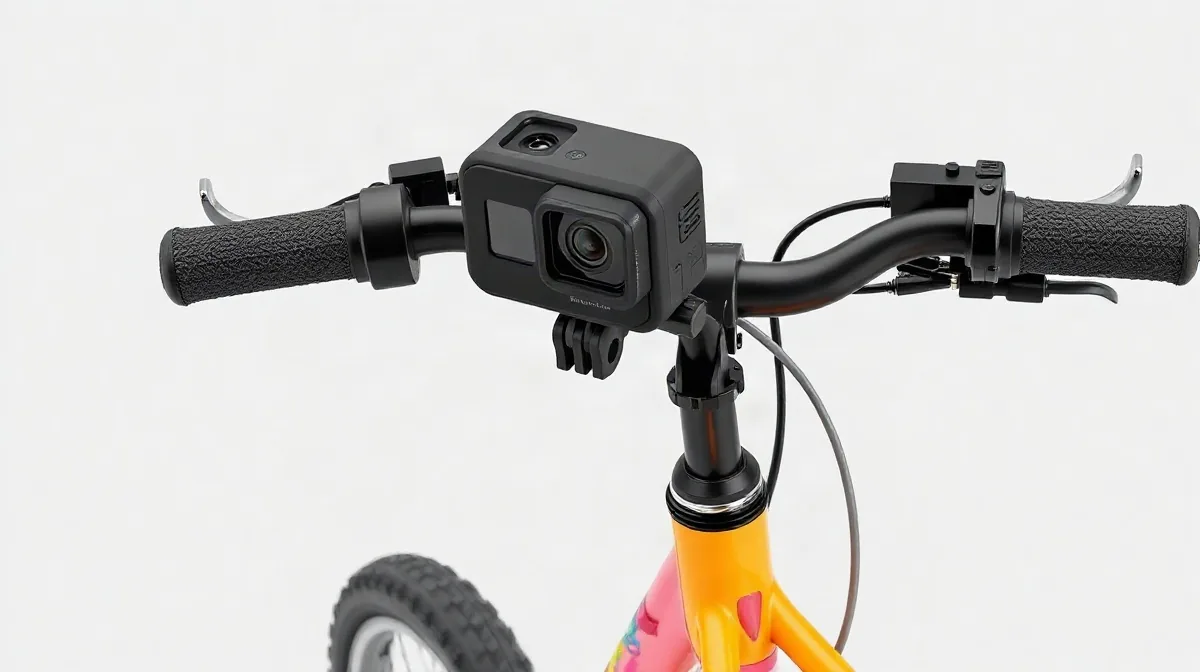
- Lightweight cameras under 150 grams, like the HERO11 Mini, easily fit on helmets and bike handlebars, enabling dynamic and immersive video capture during active play.
- Ultra-compact devices such as the Insta360 GO 3 excel in mounting versatility but may require specialized mounts because of their size and shape.
- Heavier models generally offer longer battery life but are less suited for small mounts, limiting movement-based filming opportunities for kids.
Frequently asked questions
Which video resolution is best for capturing kids’ fast action?
Does image stabilization really improve kids action videos?
Are compact cameras less capable of high-quality video?
How long do kids action camera batteries last when recording video?
Key takeaways
- 4K at 60fps is the current sweet spot for smooth, clear kids action videos.
- Optical stabilization greatly enhances footage clarity during motion.
- Wide field of view lenses between 120° and 170° capture more dynamic scenes.
- Higher video specs usually mean shorter battery life and higher cost.
- Portability affects video quality trade-offs and mounting versatility.