Client Gallery or Photobook? Choose by Job
- Published
- Reading time
- 8 min read
- Prepared by
- LiteGallery editorial team
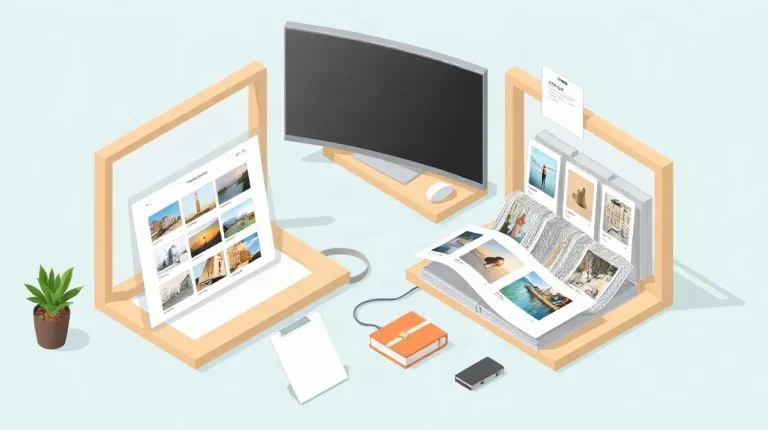
Choose a client gallery when clients need to review, select or download images; choose a photobook when the photographs should become a finished, lasting object.
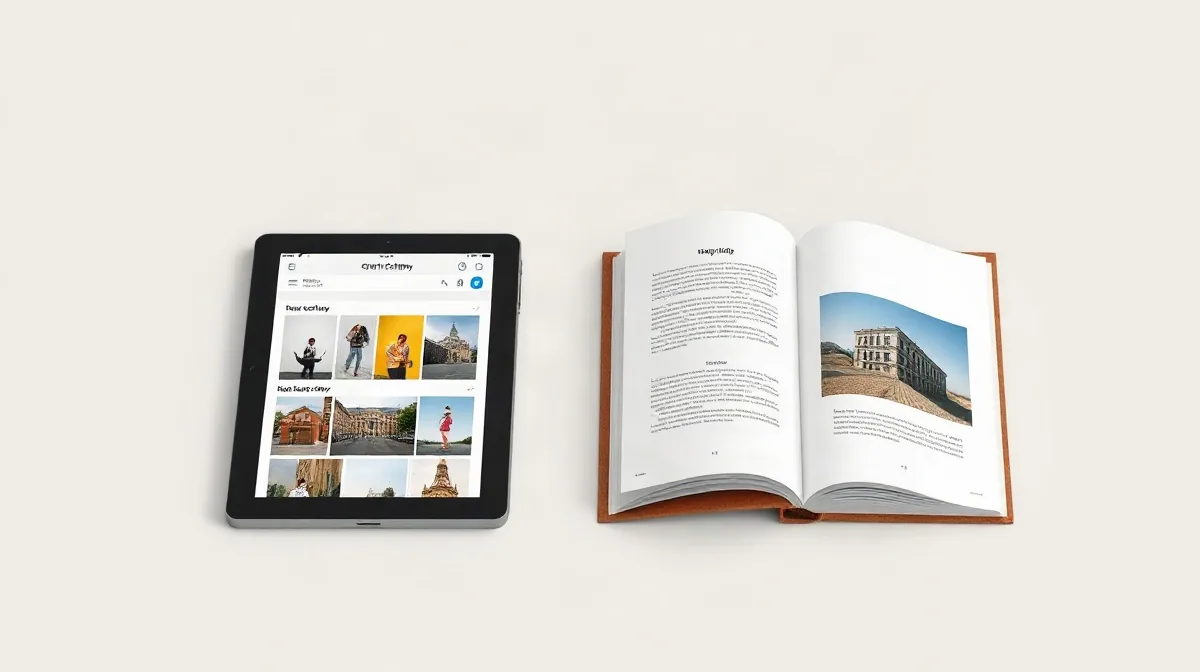
The choice depends on the job, not on which format looks more polished. A gallery keeps images accessible for decisions and delivery, while a photobook gives a selected set a physical form and an intentional sequence.
For some projects, one format is enough; for others, a gallery can handle the handoff and a photobook can preserve the final edit. Start with what the client needs to do with the photographs.
| Criterion | Client gallery | Photobook |
|---|---|---|
| Main use | Browse and download finished work | Experience a printed sequence |
| Best fit | Portrait, wedding or event delivery | Work intended as a physical keepsake or designed sequence |
| Image handling | Can handle multiple file sizes and resolutions | Orientation and page sequence shape the presentation |
| Format choice | Organize images into named collections | Portrait suits mostly vertical images; landscape handles mixed orientations |
| Budget decision | Compare gallery requirements with the project budget | Compare service formats and features with the project budget |
- more than 25 feet Length of Edward Ruscha’s continuous accordion-fold panorama
- 1990 Publication year of Burns’s Sleeping Beauty: Memorial Photography in America
When should you deliver a client gallery instead of a book?
Choose a client gallery when people need to browse and download the finished images from a portrait session, wedding or event. It gives clients a practical place to retrieve files; a photobook is a printed way to experience a selected set.
An online gallery can be customized for professional photo sharing and can prepare images in multiple file sizes and resolutions. That matters when clients need different versions for viewing, printing or other uses: explain the available download choices so they can select the right files.
Make the gallery easy to navigate
Organize the delivery into clearly named collections rather than presenting every image as one undifferentiated set. For a wedding, for example, collections might separate different parts of the event; for a portrait session, they can distinguish groups of images. Use labels that tell clients what each collection contains.
- Choose a gallery when the next step is browsing, selecting or retrieving digital files.
- Choose a photobook when the intended result is a printed collection rather than a set of downloadable images.
Before sending the gallery, check which file sizes and resolutions are available and describe what each download option is for. Clients can then retrieve the version they need without guessing.
How does a photobook change the way a client experiences photographs?
A photobook turns photographs into a physical sequence: you encounter the work by turning pages, rather than browsing a screen or downloading individual files.
That changes the role of the images. A book is suited to a project meant to be experienced together as a finished object; a client gallery is more practical when the priority is browsing and downloading digital files. Portrait, wedding and event shoots intended for client selection or delivery are natural fits for a gallery.
Format follows the images
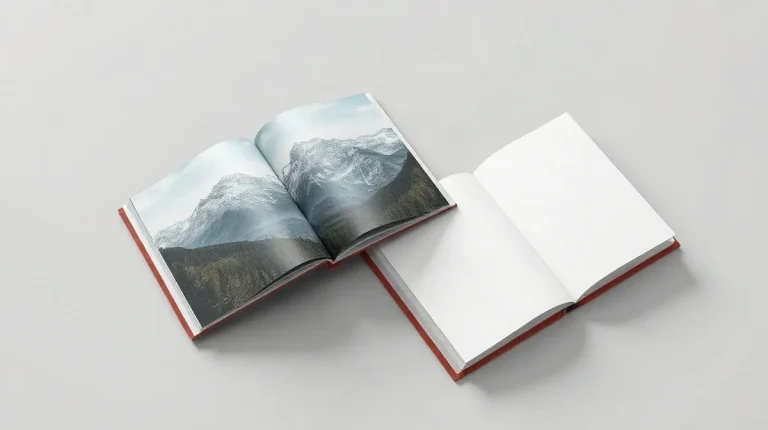
Choose a book’s orientation by looking at the photographs you want to include, not by treating portrait or landscape as a default. The main question is whether the set is mostly vertical or mixes vertical and horizontal frames.
- Vertical format: suits a set made predominantly of portrait-oriented photographs.
- Landscape format: accommodates both vertical and horizontal photographs, making it the more flexible choice for a mixed-orientation set.
Before choosing a format, review the images together and notice their dominant orientation. If most are vertical, a vertical book follows their shape; if the set mixes orientations, a landscape format gives both kinds of photograph room. For a finished project, the page sequence and orientation should serve the photographs as a group, rather than forcing each image into a digital-delivery workflow.
When does a photobook become part of the artwork?
A photobook becomes part of the artwork when its sequence, physical form or subject shapes how the photographs are understood, rather than simply delivering finished images.
Edward Ruscha used a motorized camera to photograph both sides of a Los Angeles thoroughfare, then assembled the images into a continuous accordion-fold panorama extending more than 25 feet. Unfolding the book reveals the photographs as one extended sequence; browsing separate files would change that experience.
The format matters for another reason when the book gives sustained attention to a subject. Burns’s Sleeping Beauty: Memorial Photography in America, published by Twelvetree Press in 1990, examines the practice of photographing the deceased, once an established part of mourning in American households. Here, the book’s subject is not an add-on to a collection of pictures: it gives the work its focus.
Choose the format by the job
- Use a client gallery when clients need to browse and download finished portrait, wedding or event photographs. It suits access and delivery.
- Make a photobook when the order of images, the physical act of turning or unfolding pages, or a sustained subject is central to the work.
- Match the book’s orientation to the photographs. A vertical format suits predominantly portrait-oriented images; a landscape format can accommodate both vertical and horizontal photographs.
For a delivery job, a gallery keeps the emphasis on browsing and downloads. For a work whose meaning depends on sequence, form or subject, the book itself belongs in the final edit.
What should you weigh before choosing a format?
Weigh the project budget, how clients will use the finished images, and how the photographs will fit a book’s pages before choosing a format.
Budget and delivery
A printed book has a production cost; an online gallery has its own requirements for presenting and delivering files. Neither is automatically the cheaper or better choice: compare the costs and requirements with the project budget and the client’s needs.
- Milkbooks, Artifact Uprising, Blurb and Chatbooks: Compare the specific formats and features each offers against the client’s budget and the intended book.
- Client gallery: Choose it when clients need to browse and download finished portrait, wedding or event photographs. It does not replace a physical keepsake.
- Photobook: Choose it when the deliverable should be a printed object. A book does not offer the same browsing and download workflow as a gallery.
A gallery and a book can serve different purposes, so a project may call for one or the other—or both. Decide what the client needs to do with the images, not just how they will first see them.
Match the book to the photographs
Choose orientation by looking at the photographs, not by habit. A portrait-oriented set generally suits a vertical book; a landscape format can accommodate both vertical and horizontal images. Before ordering, check how the mix of photographs will sit across the pages.
What is the simplest choice for each photography job?
Choose a client gallery for finished portrait, wedding or event work clients need to browse and download; choose a photobook when the photographs need a printed sequence people can handle and revisit.
- Client gallery: Use it to deliver finished images for browsing and downloading. Group the photographs into clearly named collections, and explain the available download choices so clients know how to get the files they need.
- Photobook: Choose a book when the job calls for a designed print sequence rather than a set of files. Match its format to the photographs: a vertical book suits a predominantly portrait-oriented set, while a landscape format can accommodate both vertical and horizontal images.
- Both: Provide a gallery alongside a book when clients need digital access as well as a printed keepsake. The gallery supports browsing and downloads; the book presents the photographs as a physical sequence.
Before delivery, check the gallery’s collection names and download instructions, then review the book layout against the image set. If it mixes vertical and horizontal photographs, make sure the chosen format gives both room to work.
Frequently asked questions
Is a client gallery better for wedding photographs?
Should a photobook be portrait or landscape?
Can a gallery and a photobook be used together?
Which photo book service should I choose?
Key takeaways
- Use a client gallery when portrait, wedding or event clients need to browse and download.
- Choose book orientation by the photographs’ predominant orientation; landscape is flexible for mixed images.
- Compare Milkbooks, Artifact Uprising, Blurb and Chatbooks against the project budget and required features.
- A gallery and a printed book serve different purposes, so a project may need both.
Sources
- sendphoto.io — “Best Ways to Share Photos with Clients”
- AGFAPHOTO Print — “Portrait vs landscape photo books : which to choose? | AgfaPhoto Print”
- format.com — “Best Way To Send Photographs and Photo Galleries To Clients”
- Modern Memories — “7 Steps to Organize, Narrow Down, and Select The Best Photos for Photo Books — Made & Kept”
- lovemaddily.com — “The 4 Photo Book Services I've Used for 15 Years (And When to Use Each)”